
Table of Contents ↓
Every weekend across Berlin, London, New York, and Stockholm, an identical silent tax takes place at the door.
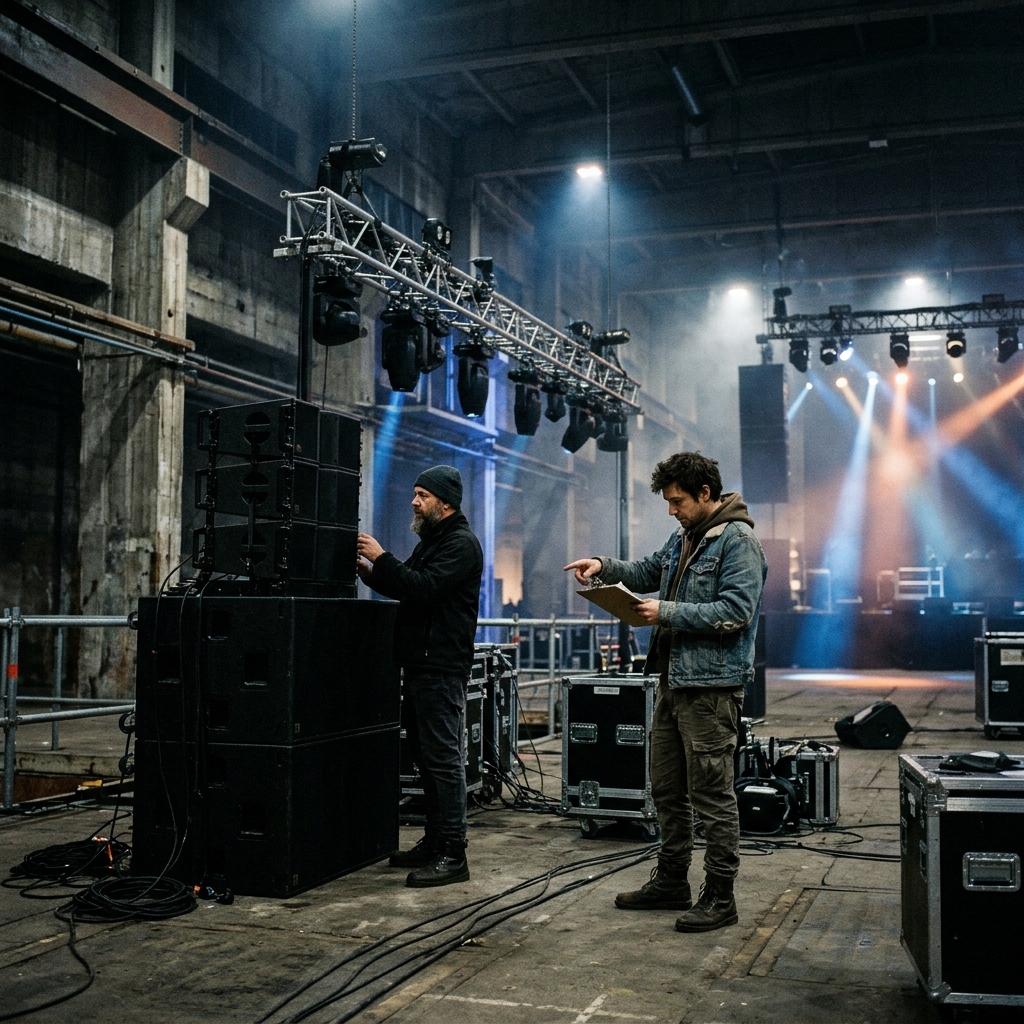
An independent club organizer rents a raw warehouse, hires a bespoke Funktion-One or Void sound system, books three underground selectors, pays security, sound technicians, and bar staff, and takes on 100% of the financial risk.
To sell tickets, the promoter lists the event on a major commercial ticketing platform. The listing advertises a face-value entry of €20.00.
Yet by the time a dancer taps Apple Pay at the final checkout step, the receipt reads €24.60.
Where did the extra €4.60 go? It did not go to the resident DJ playing the 4-hour closing set. It did not pay the sound engineer balancing the sub-bass crossover. And it certainly did not go to the club owner struggling to pay escalating commercial rent.
It was siphoned into corporate platform margins under the guise of three vague words: “Service and Processing Fee.”
1. The Anatomy of the 18% Surcharge
In standard digital commerce, payment clearing costs between 1.4% and 2.9% + €0.25 via credit card networks (Visa, Mastercard) or local clearing rails (SEPA Instant, iDEAL).
Commercial ticketing conglomerates have inflated this into a multi-tiered extraction machine. According to an extensive investigation by the U.S. Government Accountability Office (GAO Report GAO-18-347), primary ticketing fees average 27% of a ticket’s face value, frequently reaching over 40% when arbitrary handling fees are bundled. In response, consumer protection bodies—including the U.S. Federal Trade Commission (FTC)—have instituted formal regulatory actions against mandatory hidden “drip pricing” and deceptive convenience surcharges:
On a 600-capacity warehouse night selling out at €20, the gross box office is €12,000. Under this structure, over €2,200 is extracted in friction fees.
For an independent club running 40 club nights per year, this single leak drains €88,000 annually out of the grassroots ecosystem. In an industry where European live venue surveys by Live DMA demonstrate that grassroots music spaces operate on razor-thin net profit margins averaging below 2%, this siphoned capital represents the exact difference between survival and closure.
2. The Algorithmic Ad Tax: Paying Twice for Your Own Crowd
The ticketing middleman extraction does not happen in isolation. It feeds directly into the broken economics of algorithmic social media.
As we analyzed in our previous teardown on independent music economics, 1,000,000 Streams vs. 50 True Fans, organic reach on Instagram and TikTok has collapsed to 2% to 4%. The algorithms that once connected clubbers with local promoters have been aggressively monetized into pay-to-play ad networks.
This creates a devastating Double-Tax on Promoters:
- The Discovery Tax: To let your regular attendees know who is playing on Friday, you must swipe your business credit card with Meta to “Boost” the flyer. You are paying rent simply to reach people who already pressed “Follow” on your page.
- The Checkout Tax: When that ad successfully converts a dancer to your ticketing page, the legacy ticketing platform hits that same dancer with an 18% surcharge at checkout—and promptly locks the dancer’s contact information in a private corporate silo.
You paid to acquire the guest. The ticketing platform pocketed the fee and kept the customer relationship.
Promoter pays €300–€800 in sponsored posts just to reach 3% of people who already followed their account.
When the dancer converts, platform takes 18% surcharge and hides the buyer’s direct contact info—forcing you to pay ads again next month.
3. The Post-Event Liquidity Trap
The monetary surcharge is only half the crisis. The deeper operational chokehold is liquidity.
When an independent promoter lists an event on legacy ticketing platforms, the money paid by ticket buyers does not go into the promoter’s bank account. It sits inside the platform’s corporate treasury account for weeks.
Most legacy platforms enforce a T+7 to T+30 post-event payout schedule.
If you put tickets on sale in September for an event on New Year’s Eve:
- Your ticket buyers pay upfront in September and October.
- You must pay artist deposits (usually 50%), venue holding fees, security retainers, and marketing expenses out of your personal pocket or high-interest business overdrafts.
- The ticketing platform holds your €20,000+ box office float, earning institutional overnight interest on your money.
- If a minor dispute or date rescheduling occurs, payouts are frozen without recourse.
Independent nightlife operates on tight cash flow cycles. Denying venues real-time access to ticket proceeds forces organizers to become unwilling creditors to Silicon Valley and London private-equity entities.
4. The Walled Garden: Who Owns Your Dancefloor?
Ask any seasoned club promoter who their 500 most loyal attendees are. Can they export their names, email addresses, and phone numbers right now into a CSV?
On modern app-only ticketing platforms, the answer is almost always no.
These platforms operate as data silos:
- Masked Contact Information: Promoters receive aggregated graphs rather than direct communication channels to their guests.
- Algorithmic Cross-Promotion: As soon as a fan buys a ticket to your underground techno night, the platform’s recommendation engine starts serving them push notifications for commercial 10,000-person festivals happening the same weekend.
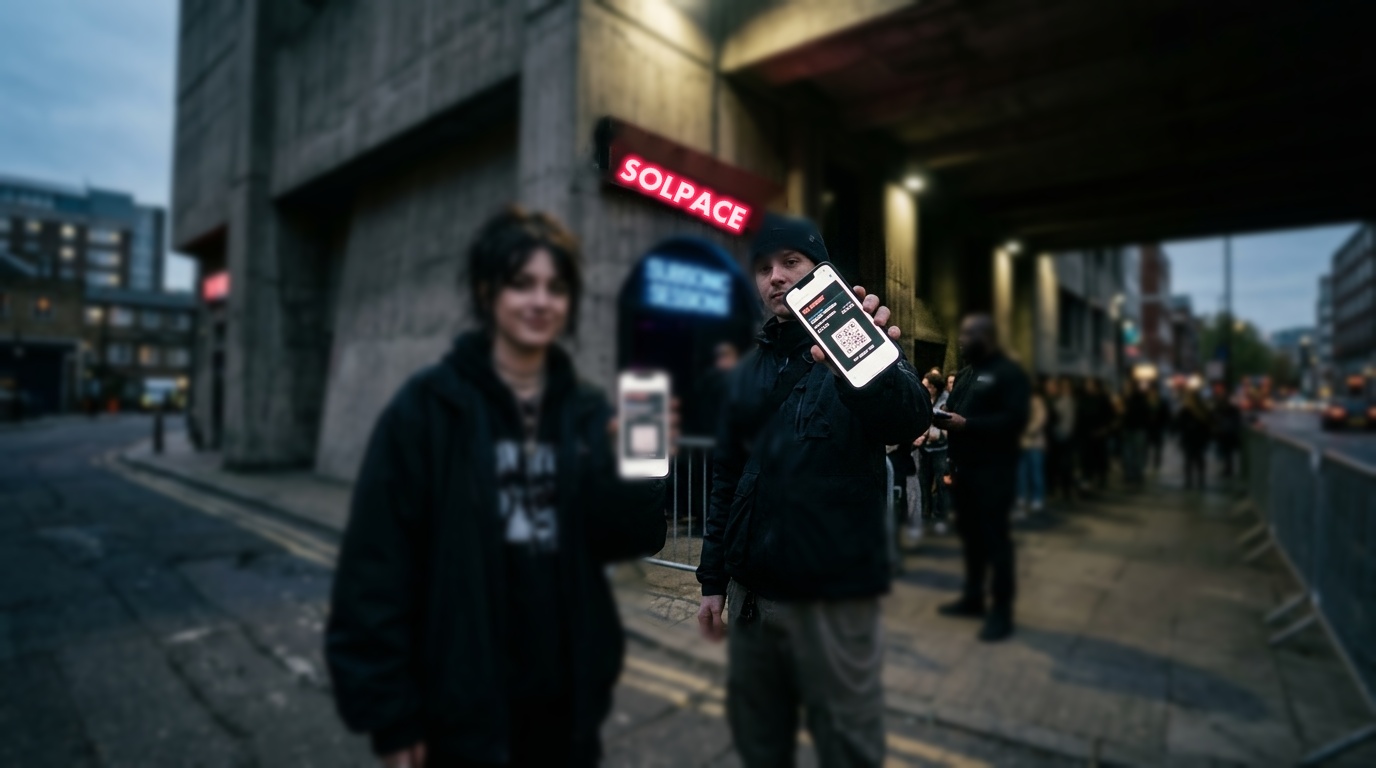
- App Hostage Requirement: Attendees are forced to download a proprietary smartphone application, register personal phone numbers, and enable Bluetooth and geolocation tracking simply to show a dynamic QR code at the entrance.
You spent five years curating an underground community, only to have your access to that community leased back to you behind someone else’s walled garden.
5. The Solpace Model: Transparent Upfront Pricing & Real Cash Flow
Software infrastructure does not run on thin air. Processing cards, maintaining global CDNs, synchronizing door scanners, and securing databases costs real money.
The difference between Solpace and legacy ticketing cartels is not that we pretend costs don’t exist. It is that we do not hide them, we do not inflate them, and we do not use them to extract speculative profit.
Here is how our financial architecture actually works:
€20.00
Routes directly to your Stripe merchant account. Standard interchange fee (~1.5%–2.9%) clears directly, unlocking rolling 24–48h cash flow for deposits.
€1.60
Displayed upfront from the first click. Cross-subsidizes 0% artist commission on music/merch and finances our offline-first door scanner fleet.
What the 8% Platform Fee Actually Funds:
- Cross-Subsidizing 0% Commission for Artists: Unlike Bandcamp (which takes 10%–15%), Solpace takes 0% platform commission on digital music sales and physical vinyl/merch. Ticket fee revenue funds our infrastructure so musicians keep 100% of their face value.
- Offline-First Door Infrastructure: Dedicated engineering for our open scanner apps, which download encrypted ticket manifests to local SQLite so door staff can scan 1,000 attendees in basements with zero cellular latency.
- High-Fidelity Audio & Video CDN: Global edge bandwidth for Adaptive Bitrate HLS audio streaming and video delivery across our community players.
- Independent R&D: We answer to independent club culture, not private-equity boardrooms demanding quarterly dividend growth.
Honest Upfront Pricing (No Drip Pricing)
We reject “drip pricing.” An 8% platform fee is added transparently as a buyer surcharge on the ticket:
- The dancer sees €21.60 on the event page from the very first click.
- No hidden checkout surprises. No €1.50 “mobile delivery fee.” No €1.20 “order processing fee.”
Direct Merchant Cash Flow
Payment processing fees (e.g., standard Stripe interchange costs of ~1.5%–2.9% + €0.25) are handled directly on the organizer’s merchant account—just like any real business.
In exchange, the organizer gains rolling 24- to 48-hour payouts. You receive ticket funds as tickets are bought. Artist deposits, sound system rentals, and venue hire are paid from actual event cash flow, not personal credit cards.
Built Around the Event, Not the Ad Network
Solpace does not make promoters buy ads to reach their own community. The platform is architected around event discovery and acoustic specs:
- Fans follow local venues, sound systems (Funktion-One, Void), and resident selectors.
- When you announce an event, notifications land directly in the follower’s feed and mobile notifications with 100% delivery—not 3%.
- You own your attendee manifest. Complete data sovereignty, exportable at any time.
6. Reclaiming the Door
The dancefloor is one of the last remaining spaces where physical human connection takes precedence over algorithmic feeds.
Allowing venture-backed ticketing platforms to position themselves between the dancer at the door and the organizer inside the booth is a historical mistake that independent culture is finally unwinding.
When you control your box office, you control your cash flow, your relationships, and your autonomy. It is time to retire the middleman.
Published by the Solpace Organisation. This teardown may be cited, referenced, and shared by independent venues, promoters, and cultural organizers under open attribution.
Ready to reclaim your independence?
Whether you're an artist selling out 12-inches, an underground promoter tuning sound systems, or a music lover tired of algorithmic feeds — join our early beta cohort.